
What Is Video Stitching?
Video stitching is the process of combining multiple video clips or streams into one continuous, seamless video. This process combines data from cameras or videos capturing diverse viewpoints into a single, cohesive result. This technique is commonly used to produce high-resolution panoramic, 360-degree, or immersive video content.

How Does Video Stitching Work?
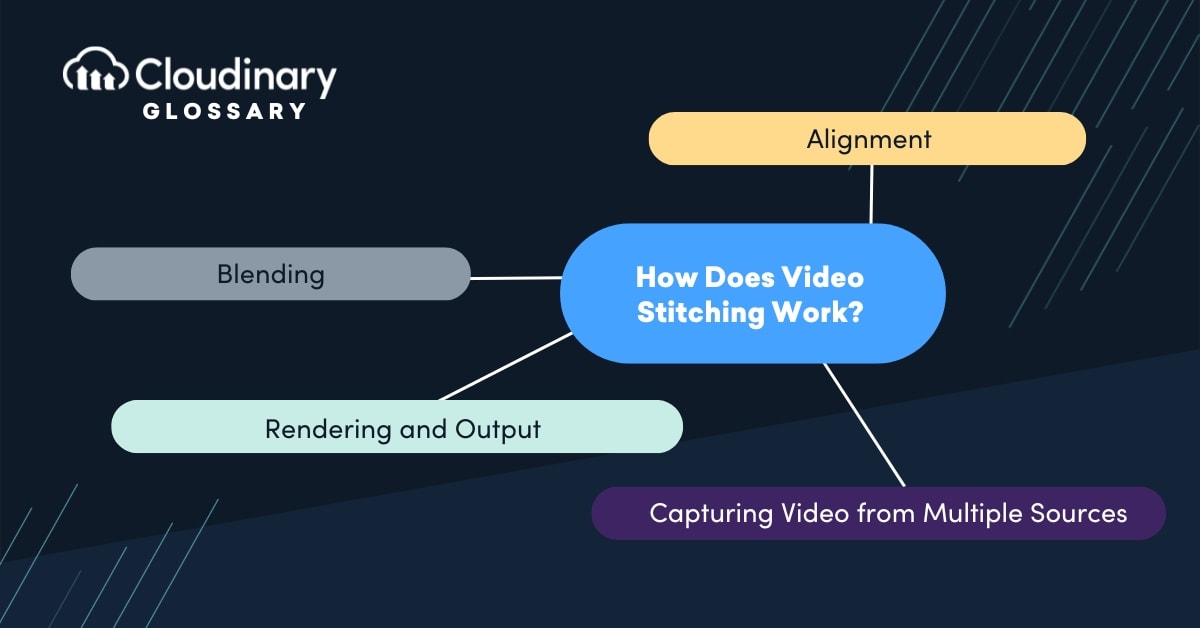
Video stitching is a technologically complex process that involves several steps to ensure accuracy and aesthetic quality in the final video output. These steps combine hardware and software capabilities to create perfect results. Here’s how it works:
- Capturing Video from Multiple Sources: The process begins with capturing video footage from multiple cameras or sensors, each covering a specific segment of the desired field of view, like a collaborative effort to build a jigsaw puzzle.
- For 360-degree videos, the cameras are typically arranged in carefully calibrated rigs or spherical configurations.
- Alignment: To do this, the stitching algorithm analyzes overlapping portions of footage to match edges and perspectives. This involves techniques like feature matching, which looks for common visual markers (such as texture, lines, or geometric points) between frames.
- Blending: Blending algorithms remove visible edges or differences in brightness, color, or exposure across clips so that it appears cohesive. Techniques such as feathering (soft blending along edges) or gradient-based adjustments are used to achieve smooth visuals.
- Rendering and Output: The final stage involves rendering the stitched footage so that it can be exported in formats suitable for playback or distribution. This step ensures the stitched video meets the resolution and compatibility standards required for specific applications like VR headsets or online streaming.
Modern video stitching relies heavily on AI and computer vision technologies to make the process quicker, more automated, and able to handle complex overlapping shots.
Pros and Cons of Video Stitching
Like any technology, video stitching comes with its own share of advantages and limitations. Let’s break them down:
Pros of Video Stitching
- Create Immersive Experiences: Video stitching enables the creation of 360-degree and VR-compatible content, allowing users to feel virtually present in the scene.
- Enhanced Coverage: Stitching provides a fuller field of view compared to a single camera, making it ideal for events, landscapes, and surveillance.
- Cost-Effective: Combining footage from multiple standard cameras is often less expensive than investing in specialized ultra-wide-angle lenses or high-end cameras.
- High Resolution: Stitching allows producers to create videos with higher resolutions by merging feeds from multiple cameras.
- Scalability: Video stitching systems can scale to accommodate larger camera setups, offering versatility for creators wanting bigger and more intricate outputs.
Cons of Video Stitching
- Complexity: The stitching process can be intricate and requires expertise in software and alignment techniques.
- Processing Demands: Stitching high-resolution videos demands significant computational power, software capabilities, and time.
- Mistakes with Misalignment: Poorly calibrated cameras or inconsistent footage can lead to alignment issues, visible stitching lines, or distortions.
- Software Dependency: High-quality stitching relies on sophisticated software and tools, which can be expensive to access.
- Limited Real-Time Applications: While technology is advancing, real-time video stitching (for live events) remains challenging due to latency issues.
Wrapping Up
Video stitching has transformed how we create and experience video content, opening up new possibilities for immersive and wide-angle visuals. This method is essential to contemporary filmmaking and multimedia, spanning VR content, panoramic video, sports broadcasts, and drone footage.
While video stitching has some technical challenges, its benefits far outweigh its limitations, especially as AI-powered tools continue to streamline the process. As technology advances, video stitching will become increasingly accessible, paving the way for creative and professional innovations.